Case study · Clinical compliance
Diversion Prevention and Impairment Identification
Training for UCSF Health staff on recognizing drug diversion and impairment, and on what to do when they see it.
- Client
- Pharmacy Management, UCSF Health
- My role
- Instructional designer and developer
- Timeline
- Nov 2024 – Oct 2025
- Tools
- Storyline 360, Google Flow, AI narration, SCORM
The challenge
The subject matter experts brought a thorough slide deck: definitions and common myths, real cases from other organizations, consequences for patients, employees, and the organization, controlled substance access points, warning signs, and UCSF's reporting pathways. Everything a learner needed was there, but it was organized as information. The job was to turn it into the moments where someone has to notice something and act.
What I did
- Reorganized the content around two skills: recognizing warning signs and reporting a concern.
- Created scenario videos with Google Flow, an AI video tool. In one, a nurse is asked to witness a medication waste she didn't see. In another, a pharmacist notices signs that a colleague is impaired.
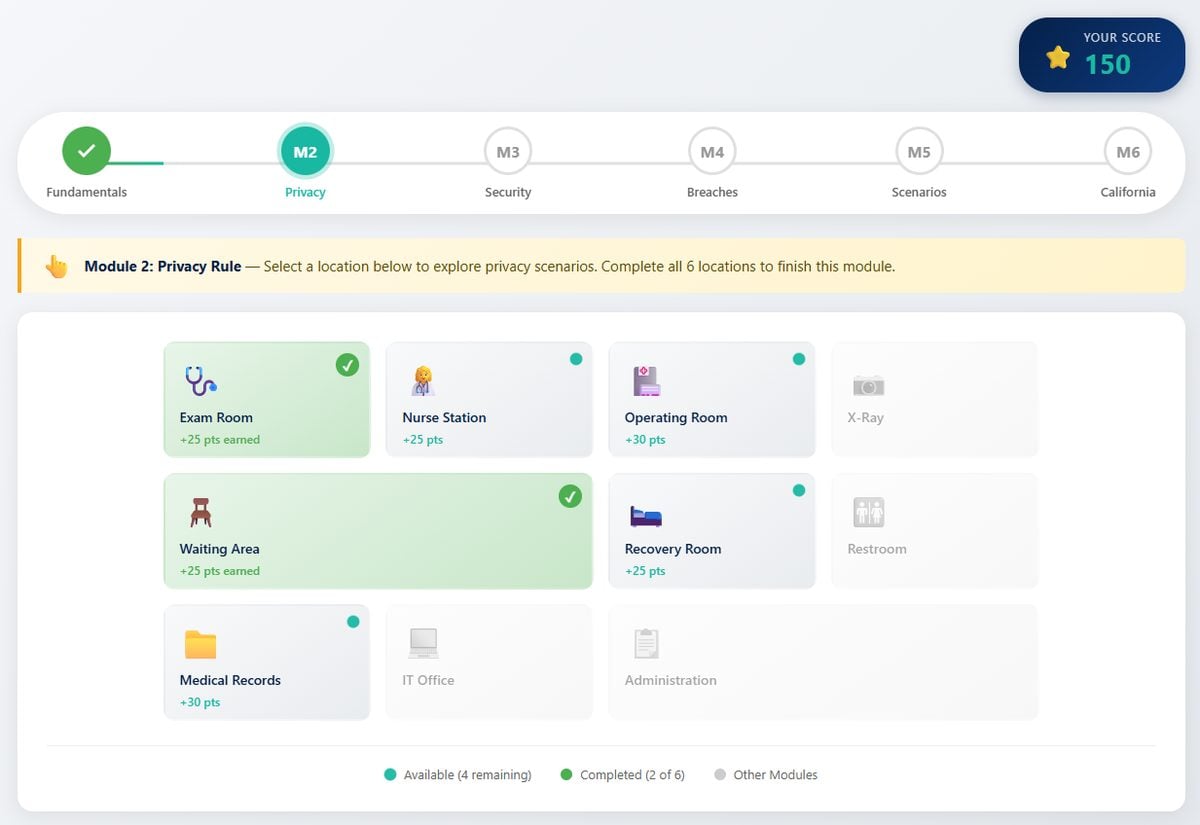
- Followed each scenario with an interactive knowledge check, so learners make the call before the course explains it.
- Added AI audio narration throughout.
- Closed with an 11-question knowledge check (80% to pass) and a policy attestation, then set up the course and its audiences in the UC Learning Center.
Why it works
AI video made realistic clinical scenarios possible without a film crew or patient footage. Learners practice the uncomfortable part, deciding whether what they saw is worth reporting, in a setting where getting it wrong is safe.

